
Bursitis in the Feet
Understanding and Treating Foot Bursitis at Our Chiropody Clinic
What is Bursitis?
Bursitis is the inflammation of a bursa—a small fluid-filled sac that acts as a cushion between bones, tendons, muscles, and skin. When healthy, bursae help reduce friction and allow smooth movement. However, when they become irritated or inflamed, they can cause significant pain and restrict mobility.
Common Areas of the Foot Affected by Bursitis
In the foot, bursitis can develop in several key areas where high friction and pressure occur, especially in people who are on their feet for long periods, wear ill-fitting shoes, or have abnormal foot mechanics.
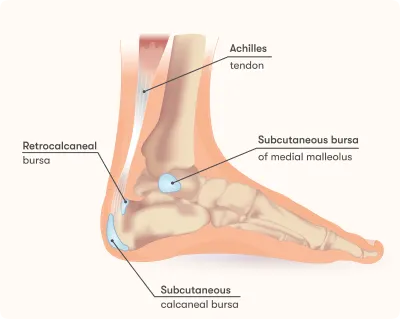
1. Retrocalcaneal Bursa
Located between the Achilles tendon and the heel bone (calcaneus), this bursa can become inflamed due to repetitive stress or tight footwear. 🦶 Commonly associated with Achilles tendinitis or Haglund’s deformity.
2. Subcutaneous Calcaneal Bursa
This bursa lies between the skin and the Achilles tendon. It’s prone to irritation from shoes that rub against the back of the heel. 🥿 Visible swelling and tenderness are common.
3. Intermetatarsal Bursae
Found between the metatarsal bones in the ball of the foot. Inflammation here often mimics Morton’s neuroma or metatarsalgia. 👣 Pain is typically felt when walking barefoot or in tight shoes.
4. First Metatarsophalangeal (Big Toe) Bursa
This bursa can be irritated in individuals with bunions or hallux valgus. 👟 Pain and swelling often occur near the inside of the big toe joint.
Symptoms of Foot Bursitis
- Localized pain and tenderness
- Swelling and warmth
- Redness over the affected area
- Discomfort during walking or standing
- Increased pain with activity or pressure
Diagnosis at Our Chiropody Clinic
Our chiropodists conduct a thorough biomechanical assessment, gait analysis, and physical examination.
Treatment Options
Treatment is tailored to each patient’s condition and lifestyle needs:
🔹 Footwear Modification
Proper shoes with adequate support and heel cushioning are essential.
🔹 Custom Orthotics
We may prescribe custom orthotics to offload pressure and correct biomechanical imbalances.
🔹 Padding & Offloading Techniques
Silicone pads, heel cups, or metatarsal pads may reduce friction and relieve pressure on the affected bursa.
🔹 Manual Therapy & Mobilization
Chiropodists trained in Functional Manual Therapy (FMT) can mobilize soft tissues to reduce tension around the inflamed area.
🔹 Modalities
Cryotherapy (ice), ultrasound therapy, or low-level laser therapy may help reduce inflammation and pain.
🔹 Anti-inflammatory Measures
Topical or oral anti-inflammatories may be suggested in collaboration with your physician.
🔹 Activity Modification & Stretching
We provide guidance on safe activity levels and recommend stretching routines, especially for tight calf muscles or plantar fascitis.
When to Seek Help
If you’re experiencing persistent heel, toe, or forefoot pain with swelling or warmth, don’t wait—early intervention can prevent chronic bursitis and long-term complications. Our chiropody team is here to assess, diagnose, and develop a treatment plan tailored to your needs.